
Signs Your AC Filter Needs Replacing
A dirty filter interferes with the airflow, which makes your AC work harder than it should. Dust may accumulate faster than usual. The filter may look gray or matted instead of clean. Catch these signs early and you could avoid a larger repair bill. If you notice these issues, and want a professional air conditioning contractor to change your filter, give us a call.

How do you know it's time? Your filter won't beep or flash a warning light. It stops doing its job and your AC pays the price.
- Airflow from your vents feels weak. The AC seems to struggle when pushing air through the house.
- Your energy bill climbs even though the weather outside has not changed much.
- Dust settles on furniture and shelves faster than it used to.
- The filter looks gray or matted instead of white and clean.
- Your AC runs longer cycles to reach the same thermostat setting.
We see this every week. People call about a weak AC and the filter turns out to be the problem. Not sure if that's your issue? Pull out the filter and hold it up to a light. If you can't see light through it then it's done.
That grimy filter isn't only an airflow problem. It shows that your coil and blower are taking in dirty air each time the system starts.
Filter Size and Rating Mistakes That Hurt Airflow
We see this often. A homeowner grabs a filter off the shelf because the size looks close enough. Then they force it into the slot and call it done. Close enough isn't good enough. Even a quarter-inch gap lets unfiltered air slip around the filter. That air goes back into your system. Your coil gets dusty and your air quality drops. You may not notice because the filter still fits into the slot.
MERV ratings cause even more confusion than filter sizes. A bigger number does not give every home a better result.
- Buying a MERV 13 filter for a system built to handle MERV 8. This forces the blower to work harder than designed.
- Assuming a thicker filter will fit. Older Fenton homes with narrow return grilles often need a slimmer filter.
- Ignoring the airflow arrow printed on the frame. This puts the filter backward and traps dust on the wrong side.
- Using different sizes in multiple return vents. One filter gets changed on schedule while another is forgotten.
Many older Fenton homes have return ductwork sized for basic filters. Those ducts were not built for high-MERV filters made for hospital filtration. Installing one can choke the airflow because it creates too much resistance (opens in a new tab). The blower motor strains. The coil can freeze. Your energy bill may rise before you notice another problem. A higher rating isn't wrong for every system. It is wrong for many of the systems we service. Match the filter to the system instead of choosing the label that sounds impressive.
When You Can Skip Professional Filter Replacement
You can handle a standard 1-inch filter if its slot is easy to reach. Pull out the old filter and check the airflow arrow. Then slide in the new one. The job takes about five minutes.
That's most of the job. A basic filter change doesn't need a license.
- The filter slot is out in the open. It isn't buried behind ductwork or inside a tight crawl space.
- You know the exact size printed on the old filter frame.
- Your system runs fine with no odd smells or weak airflow. There is no ice on the coil.
- You're doing a routine change on schedule instead of trying to solve another problem.
When should you skip the DIY route? Call for help when something else is going on beneath the surface. A dirty filter can be the symptom instead of the cause. You may have changed the filter twice but still have weak airflow. That points to a duct or blower problem behind it.
We hear this often. Someone changed the filter three times during the summer and the house still won't cool past 78. The filter is not the likely cause.
Go ahead if you can reach the filter and confirm its size. You should also be able to change it without wrestling with the ductwork. We'd rather have you save the service visit for a problem that needs a trained eye.
What Happens During an AC Filter Replacement Visit in Fenton
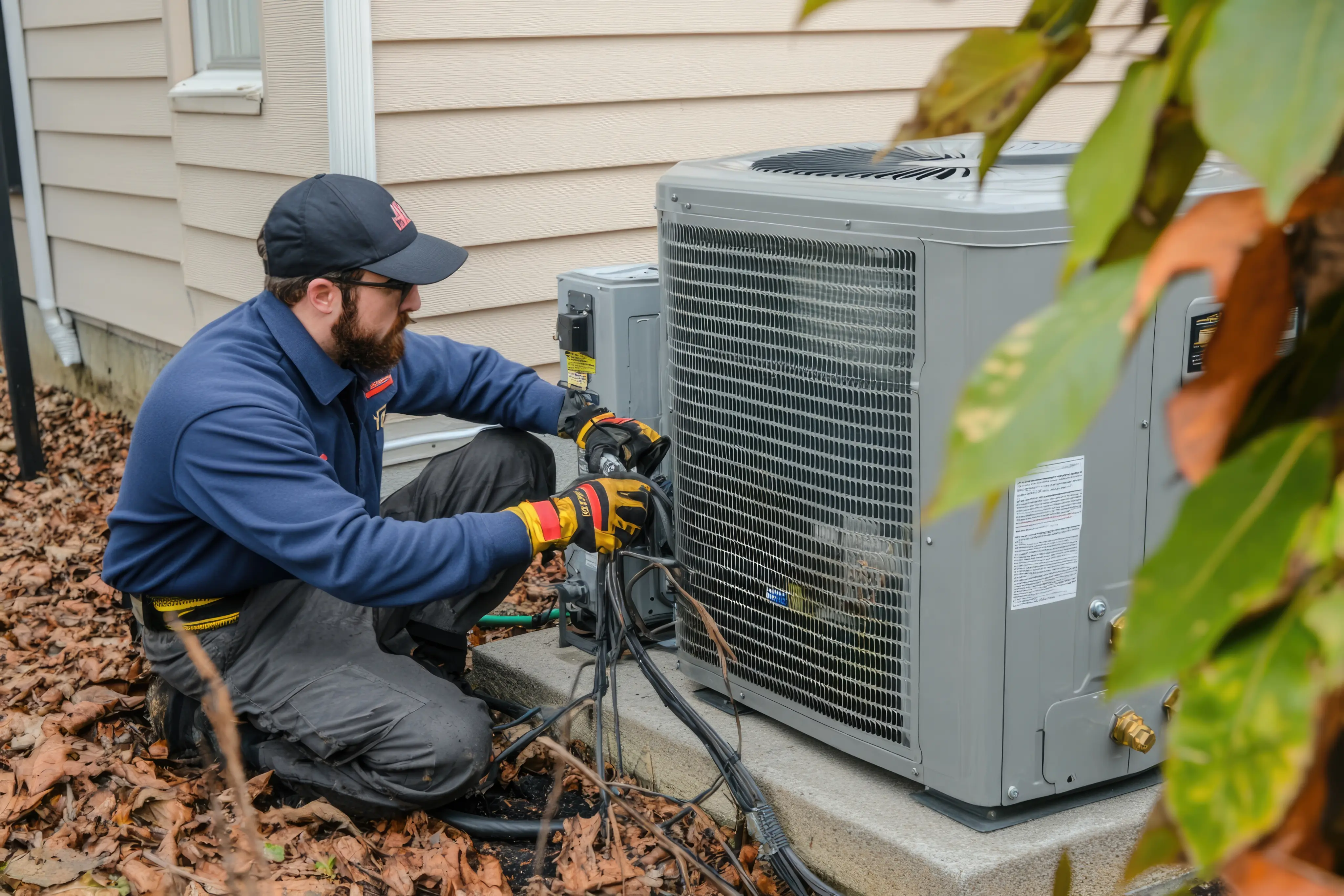
What happens when we show up? The visit isn't complicated. We keep the process simple so you know what we're doing with your system.
- Locate the slots. We check your system and locate each filter slot. Some homes have return vents hidden in a hallway ceiling.
- Inspect the old filter. We remove the old filter and inspect it. Its condition tells us about your air quality and replacement schedule.
- Measure and match. We measure the slot and match the filter size. We also check the right MERV rating for your unit.
- Install correctly. We install the new filter in the right direction. The airflow arrow matters.
- Check airflow. We check airflow to confirm the system is moving air as it should.
Homes near the Meramec River in Fenton can deal with added humidity. That moisture speeds up dust buildup on filters. We see this during service visits in that area. A filter may look fine after two months in a drier spot. Near the river it can look packed after six weeks.
The whole visit is quick. We don't tear down your system or leave a mess. We check the filter and airflow before wrapping up.
We also look at your ductwork while we're there. This isn't a full inspection. It is a quick check because dirty filters and leaky ducts can cause similar problems.
How AC Filter Replacement Pricing Works
Most HVAC companies price AC filter replacement in one of two ways. The work may be included in a maintenance visit. It may also be billed as a short service call. The filter affects the price. A basic panel filter costs less than a thick pleated filter with a higher MERV rating.
Larger systems need larger filters. That changes the cost on its own. A single-family Fenton home with one central unit is one type of job. A duplex with two attic systems is another.
What changes the price? Several factors come into play.
- Filter type and MERV rating. Filters with higher filtration often cost more.
- System access. Tight attics or awkward closet units take longer to service.
- A standalone visit may cost differently than A/C preventive maintenance that includes a filter change.
- Filter size. Some older homes use unusual or custom dimensions.
- The number of return vents connected to the system.
Ask any provider two questions before the visit. Find out what size and rating your system needs. Ask if the visit includes an airflow check at the vents. A tech who swaps the filter and leaves has not checked much else.
We get calls after someone buys the wrong filter size online and forces it in sideways. That's an easy fix. It also shows why the right fit matters more than choosing the lowest-priced filter on the shelf.