What Decides If a Furnace Can Be Fixed
We hear this question on nearly every winter call in Fenton. A homeowner stands in the basement with a coat still on. They want to know if the old unit has one more season left in it.
Our answer comes down to a handful of things we check right there in the room.
- The part that broke. A worn igniter or a dirty flame sensor is a quick swap.
- Any safety risk. A cracked heat exchanger can leak carbon monoxide, and we won't patch that.
- Your furnace's age. Parts for older units get harder to find each year.
- How often it's needed help. Three service calls in two winters tells us a lot.
- If every room still gets warm. Cold back bedrooms can point to a tired unit or duct trouble.
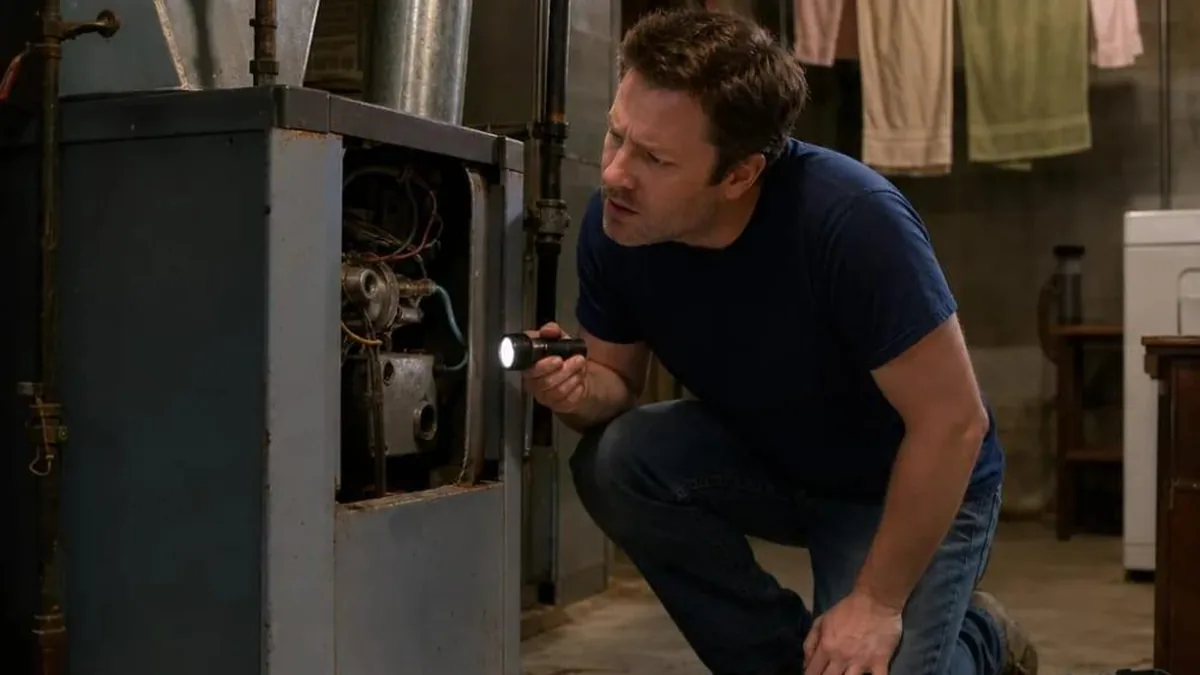
Small parts are the good news. Igniters and flame sensors wear out the way brake pads do. Replacing one doesn't mean your furnace is dying. It means the furnace has been doing its job.
But big parts tell a different story. The heat exchanger is the heart of a gas furnace. Once it cracks, a furnace repair usually stops making sense.
Last winter we visited a family off Gravois Road whose furnace kept shutting off. They were sure it was finished. It was a dirty flame sensor; we cleaned it in about ten minutes. The heat came right back on.
A few weeks later, a different call went the other way. That furnace was older than the couple's teenage son. We found a crack in the heat exchanger during our inspection. Fixing it just wasn't safe.
Fenton winters also play a part. A furnace might sit quiet through a mild week. Then a cold snap rolls through the Meramec valley and it runs nonstop for days. Those swings are hard on older parts, so problems tend to show up all at once.
So how do you know which kind of problem you've got? Most folks can't tell from the thermostat alone. Odd noises and smells give you clues. A real look inside is what decides it.
We'll always tell you straight if a repair is worthwhile. If it's a simple fix, we'll fix it. If it isn't safe, we'll explain why in plain words and show you what we found. Learn more about our furnace repair service in Fenton.
Common Furnace Problems That Are Usually Repairable
Your furnace quit on a cold night. Does that mean it's done for good? Usually not.
Most of the no-heat calls we answer around Fenton come down to a few small parts. These parts wear out from normal use. Swapping one out is often a short job, and your furnace goes right back to work.
Each one can make a healthy furnace act like it's dying. But none of them mean you need a new system.
- A dirty flame sensor. This thin metal rod gets coated with grime over time. Your furnace lights up and then shuts off a few seconds later. A cleaning often solves it.
- A worn-out igniter. When it cracks, the gas never lights. You'll get cold air or no air at all.
- A clogged air filter. Low airflow makes the furnace run hot, so it shuts itself off to stay safe.
- A weak capacitor or blower motor problem. You might hear a hum while no air comes out of your vents.
- A thermostat issue. Dead batteries or a loose wire can look exactly like a broken furnace.
- A blocked drain line on a high-efficiency furnace. Water backs up and trips a safety switch.
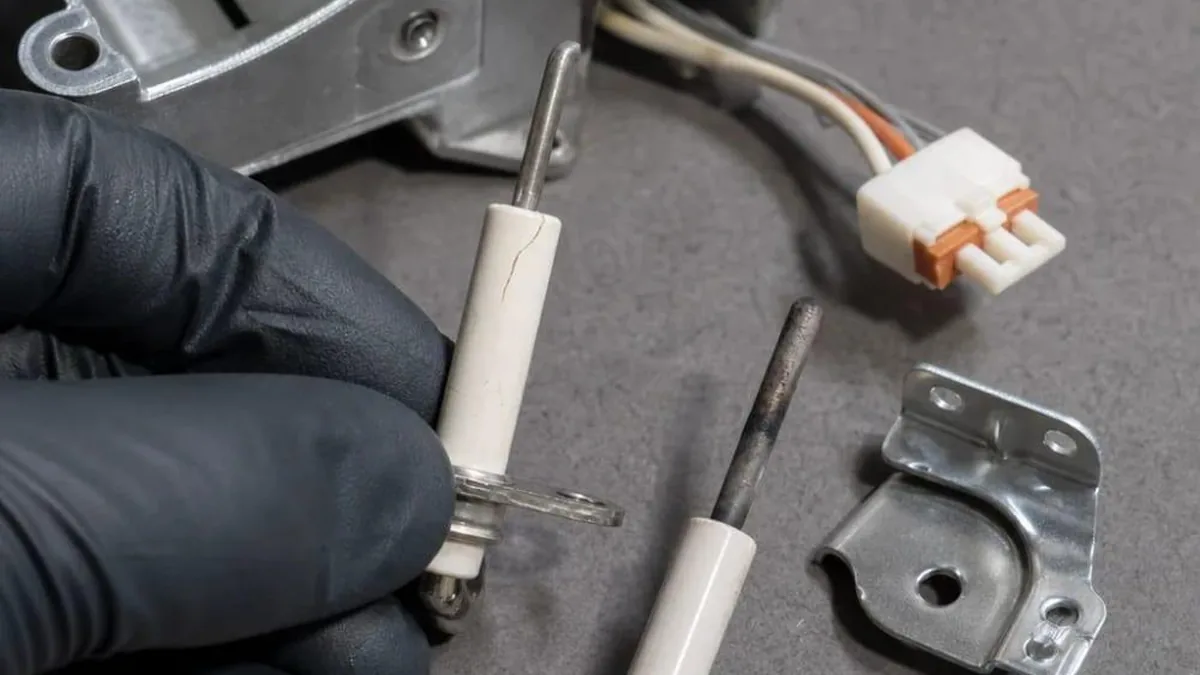
Many Fenton furnaces sit quiet all summer while dust settles on sensors and burners. So the first real cold snap in fall is when these small problems tend to show up. A furnace that worked fine last March can stall in November for a simple reason.
A few of these you can check yourself. Look at your filter first. If it's gray and packed with dust, swap it out. Then check your thermostat batteries and make sure it's set to heat.
Still no heat after that? Stop there.
Igniters and capacitors need the right tools and training. Capacitors also hold an electric charge after the power is off. A good furnace repair service in Fenton tests these small parts first, before anyone brings up replacement. That's how you avoid paying for a new system you didn't need.
If you smell gas, don't try to fix anything. Leave your home right away and call your gas company from outside. Once the gas company says it's safe, give us a call.
Some problems do point toward bigger trouble. A cracked heat exchanger is one of them. But those cases are far less common than a dirty sensor or a worn igniter. Most of the time a fix is the smart move.
When Repair Isn't the Right Call: A Scenario Check
Most furnaces can be fixed. But we'd be doing you no favors if we said every furnace repair is worth it.
A tech can fix the part that failed today, and another part quits next month. So before you say yes to a furnace repair, it helps to run a quick scenario check.
These are the situations where we usually ask homeowners to pause. Each one is a sign that replacement deserves a real look.
- Your furnace is 15 years old or older and the repair calls keep stacking up.
- The tech finds a cracked heat exchanger, which can leak carbon monoxide into your home.
- You've needed furnace repair two or three times in the same heating season.
- The part you need isn't made anymore or takes weeks to track down.
- Some rooms stay cold no matter how high you set the thermostat.
ENERGY STAR identifies many of these same warning signs in its guidance on when to replace heating equipment (opens in a new tab), including furnaces over 15 years old, frequent repairs, rising energy bills, and uneven heating.
Any one of these should trigger a talk. Two or more? That's usually your answer.
A family in an older ranch home near Old Town Fenton called us in January. Their furnace had already been fixed twice since Thanksgiving. This time the blower motor was failing. Our tech also spotted rust around the burners.
Could we swap the motor? Sure. The rust raised concerns about the furnace's condition, so we explained what further inspection could establish. We laid out both paths and let them pick. They went with a new system; they haven't called us about a cold house since.
A cracked heat exchanger is the one scenario we won't treat as a judgment call. Carbon monoxide has no smell and no color. If a tech confirms a cracked heat exchanger, the furnace should stay off until a qualified professional determines and completes the safe repair or replacement. Keep working CO detectors near every bedroom too.
Your family's safety comes first, every time.
Fenton winters don't help an aging furnace either. One week it's 45 degrees out. The next week it drops into single digits. Those big swings make your furnace cycle on and off a lot more, and worn parts don't hold up well under that kind of stress.
Not sure where your furnace falls? Ask yourself these four questions before you approve the next furnace repair.
- How old is the furnace? Check the label inside the front panel door.
- How many repair calls have you made in the last two years?
- Did the tech mention the heat exchanger or any safety concern?
- Are your heating bills climbing while your habits stay the same?
Furnaces wear out. Knowing when to stop fixing one is half the battle.
We'd rather give you the honest picture now than sell you a repair that won't last.