What Determines a Furnace's Lifespan
Age is only part of the story. How well your furnace was sized, how often it got serviced, and how much moisture it lives with all decide how long it really lasts. If you're weighing another repair against replacement, our furnace repair service in Fenton can help you understand the condition of your existing system.
Most gas furnaces are built to last about 15 to 20 years. That's the general range across the industry. So if yours is pushing 30, it's running on borrowed time. But two furnaces the same age can be in very different shape.
Why does one unit quit at 14 while another hums along at 28? It usually comes down to a few habits and conditions. Some happened on install day. Others built up quietly over the years.
These are the things we check first when we look at an older furnace.
- Sizing at install. A furnace that's too big turns on and off all day, and that short cycling wears out parts fast.
- Yearly tune-ups. Units that receive regular furnace maintenance generally last longer than neglected ones.
- Filter habits. A clogged filter chokes airflow and makes the heat exchanger run hot.
- Ductwork. Leaky or undersized ducts force the blower motor to work harder than it should.
- Moisture around the unit. Damp basements cause rust on burners and inside the cabinet.
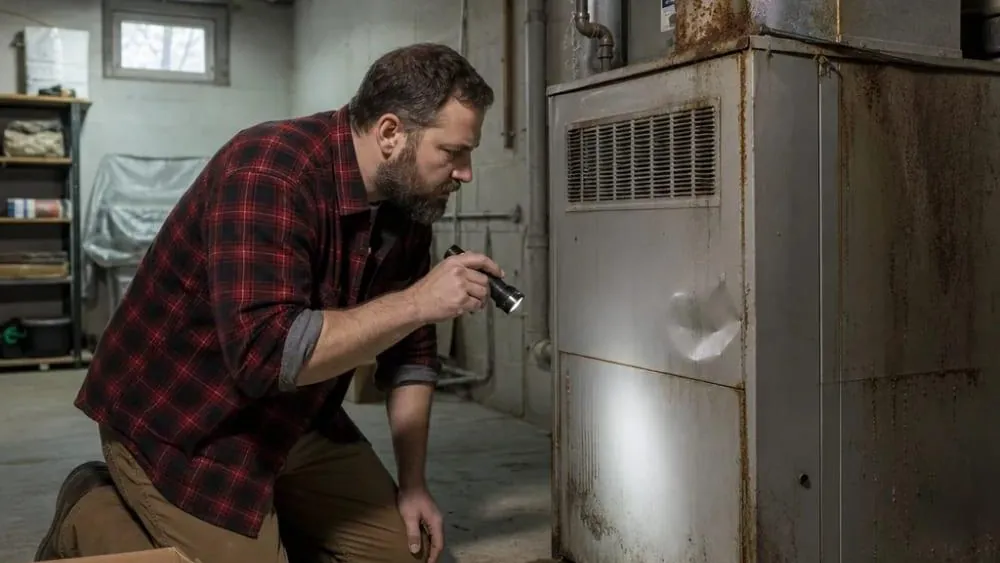
Plenty of Fenton homes keep the furnace in a basement, and some sit close to the Meramec River. Humid summers and the odd wet spring leave those spaces damp. Rust doesn't care how solid the brand was.
Run time plays a part too. Missouri winters swing hard. A cold snap in January can keep a furnace running for hours at a time. Those long stretches add up over three decades. Every heating season also adds more heating and cooling cycles to the heat exchanger.
The heat exchanger is the big one. It's the metal part that keeps combustion gases away from the air you breathe. Over time, heating and cooling makes it expand and shrink. Eventually it can crack. Once that happens, repair usually isn't the smart move.
We see this all the time. A homeowner tells us the furnace still turns on fine, so it must be healthy. But turning on and running safely aren't the same thing.
We visited a ranch home off Gravois Road with a furnace from the early 1990s. It still heated the house. The owner had changed filters faithfully and never skipped a tune-up. But the cabinet floor was rusted through from years of basement humidity, and the burners showed heavy corrosion. Good care bought that furnace extra years. Moisture took them back.
Most people don't realize their furnace's history is as important as its birthday. Do you know who installed yours? Or how often it's been serviced? If you bought the home with the furnace already in place, you may not have any idea.
That's okay. A trained eye can read a lot from the unit itself. Rust patterns, soot marks and flame color all tell part of the story. So does the sound of the blower when it kicks on.
Signs Your Furnace Is Nearing the End
A 30-year-old furnace rarely quits without warning. It drops hints for months. Sometimes years. Most folks just learn to live with the noise and the chilly back bedroom.
So what should you watch for? These are the signs our techs notice most on older units around town.
- Repair calls keep piling up. Two or more service visits in one winter is a red flag.
- Your gas bill keeps creeping higher even though your habits haven't changed.
- Some rooms feel toasty while others stay chilly no matter where you set the thermostat.
- The burner flame appears unusually yellow, unstable, or different from its normal appearance.
- You hear banging or squealing every time the blower kicks on.
- Rust or cracks show up on the cabinet or around the flue pipe.
- Family members experience unexplained headaches, dizziness, or nausea while the furnace is running.
One sign by itself doesn't always mean you need a new furnace. But a few of them together on a unit this old? That's a pattern to take seriously.
An unusual flame can signal a combustion problem, but flame color alone doesn't diagnose carbon monoxide or a cracked heat exchanger. Carbon monoxide is a gas you can't see or smell. The U.S. Consumer Product Safety Commission's carbon monoxide guidance (opens in a new tab) explains the importance of working CO alarms and professional inspection of fuel-burning appliances. Homes with gas furnaces should have working carbon monoxide alarms on every level and near sleeping areas, following the alarms' placement instructions.
If a carbon monoxide alarm sounds or you suspect exposure, get everyone outside immediately and contact emergency services. Don't continue operating the furnace until the problem has been investigated.
On furnaces this age, we also check closely for a cracked heat exchanger. It's the metal wall that keeps exhaust gases out of the air you breathe. Metal expands and shrinks every time the furnace cycles. After 30 winters, that repeated stress can take a toll.
Fenton winters don't help. A mild week in January can flip to single digits overnight. Old furnaces hate those swings because they run hard with almost no break.
Last winter a family near Fenton City Park called us about a burning smell. Their furnace was original to the house and dated back to the mid-1990s. We found a cracked heat exchanger and rust eating through the base. Patching it wasn't safe. So we walked them through their options, and they chose a replacement before the next cold snap hit.
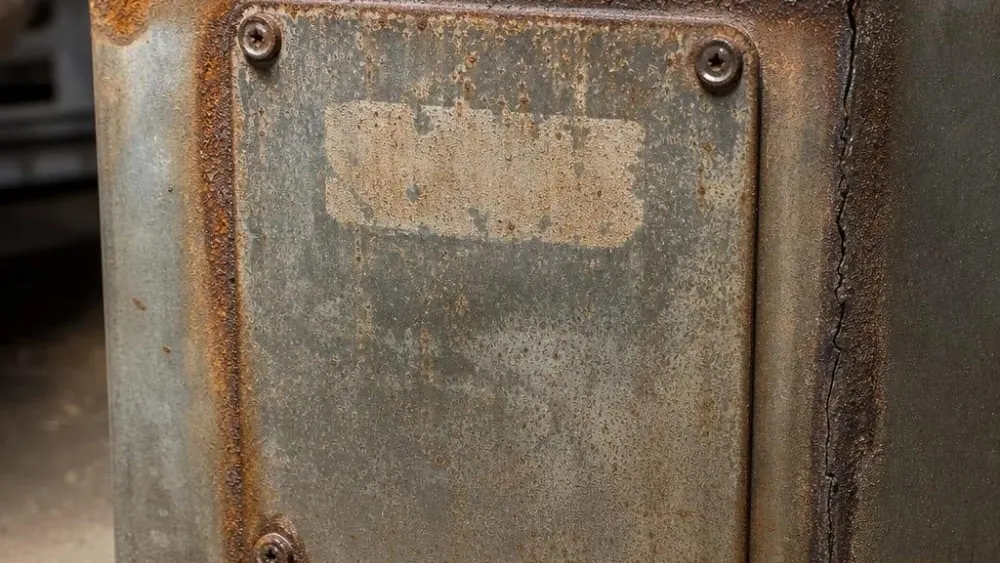
A fieldwork tip from our techs: Look for the furnace's data plate, usually on or inside an access panel; follow the manufacturer's instructions and don't open sealed or service-only compartments. It usually lists the model number and a serial number that can help identify the manufacture date. If the furnace was manufactured about 30 years ago or more, it's in the age range we're talking about.
A solid furnace repair service in Fenton will tell you when a fix stops making sense. And it won't push a new system on you if a repair will carry you safely through a few more winters.
Your furnace is talking. Listen.
Repair or Replace: A Scenario-Based Decision Guide
No two old furnaces fail the same way. That's why a simple age rule doesn't work. We'd rather look at what's going on in your home first. These are the situations we see most in Fenton basements, plus how we'd handle each one.
The small fix on a solid unit. Say your furnace won't light one cold morning in January. We find a worn ignitor, and the rest of the system looks healthy. The burners are clean and the heat exchanger has no cracks. In that case, a repair is a fair choice. You'll get heat back today, and you'll buy yourself time to plan.
The cracked heat exchanger. A cracked heat exchanger can compromise the barrier between combustion gases and the air circulating through your home. That's a serious safety concern, especially in a furnace this old. We won't patch it and walk away. It's not safe. On a furnace this old replacement is the right move.
The repeat visitor. We had a homeowner near Fenton City Park call us three times in one winter. First a blower motor. Then a control board. Then the inducer fan. Each repair worked, but the next part failed a few weeks later. That's a pattern. When a 30-year-old furnace starts breaking in a chain like that, more repairs usually just delay the same choice.
The comfort problem. Maybe nothing's broken at all. But your upstairs bedrooms stay chilly and your gas bills creep up every year. Lots of split-level homes around Fenton run into this with older furnaces. The unit runs, it just doesn't keep up like it used to. That might mean the furnace is nearing the end of its useful life. But before replacing it, we'd also check for airflow problems, leaky ducts, or other issues affecting comfort.
The short-timer. Planning to sell in a year or two? If the furnace is safe and the repair is small, fixing it can make sense. Just know that buyers and home inspectors in St. Louis County tend to flag a furnace from the 1990s.
Still not sure where you land? Run through these questions in order. Stop at the first one that gives you a clear answer.
- Is it safe? A confirmed cracked heat exchanger may make replacement necessary. If a carbon monoxide alarm sounds, leave the home immediately and have the source investigated before deciding what needs repair or replacement.
- Is this the first big repair in years? A single failure on a well-kept furnace often deserves a fix.
- Can your tech still get the parts of this model? Some older components for furnaces are getting hard to find.
- How long will you stay in the home? A longer stay makes a new system easier to justify.
- Does your home feel even and comfortable? Cold rooms and rising bills count, even when nothing's broken.
Most folks know their answer by question three. And if you don't, that's okay.
From our service van. We always check the heat exchanger and run a carbon monoxide test before we suggest a repair on an older furnace. Most people don't realize a furnace can heat the house fine and still be unsafe. That one test changes the whole conversation.
We'll never push you toward replacement when a repair will do the job. But we also won't sell you a fix we don't believe in. You'll get a straight answer and the reasons behind it.