The Furnace Parts That Usually Cost the Most to Fix
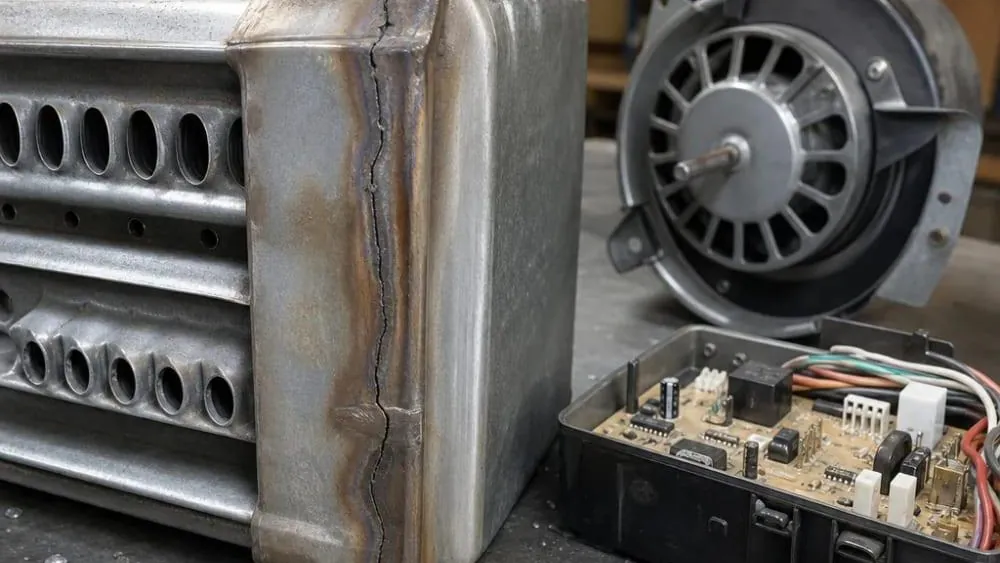
Some furnace parts are small and quick to swap. Others sit deep inside the cabinet and take hours of labor just to reach. It's the metal chamber that separates combustion gases from the air circulating through your home. A crack can create a pathway for combustion gases to enter that air, although a crack alone doesn't establish that carbon monoxide is entering your living space. The U.S. Consumer Product Safety Commission recommends carbon monoxide alarms on every level of your home (opens in a new tab).
A suspected cracked heat exchanger needs prompt professional evaluation. Don't keep operating a furnace that a qualified technician has identified as unsafe.
We find these problems most often in furnaces that are 15 years or older. Years of heating up and cooling down can fatigue the metal. In Fenton, long cold stretches in January and February mean extended furnace operation, adding to the wear that comes with age.
After the heat exchanger, a handful of parts tend to drive up a furnace repair. This is what we see on service calls around Fenton:
- Blower motor. It pushes warm air through your ducts, and newer variable-speed models can be costly to replace.
- Control board. It manages the furnace's operation. A power surge or wiring problem can damage it.
- Gas valve. When a gas valve fails, the burners may not light. A technician needs to diagnose and handle this component.
- Inducer motor. This fan moves combustion exhaust through the venting system before ignition. A loud whine or rattle can be an early clue that something is wrong.
- Flame sensors and igniters. These usually cost less to fix, but a bad one can make the furnace stop heating entirely.
Last winter a family near Fenton City Park called us because their furnace kept shutting off after a few minutes. They figured it was the thermostat. It turned out to be an inducer motor that had been straining for months. Because they called when they did, their heat exchanger was still in good shape.
Odd new noises and changes in the burner flame are reasons to arrange an inspection. You don't need to identify the failed part yourself. Tell us what changed and when you first noticed it.
For diagnosis and repair options, see our furnace repair service in Fenton.
Why Some Furnace Repairs Cost More Than Others
Two furnace repairs can look alike at first, but the work behind them can be very different. The price depends on the failed part, how hard it is to reach, and the condition of the furnace.
A flame sensor or igniter may be accessible and relatively quick to replace. The heat exchanger is buried deeper inside the cabinet. Replacing it can require substantial disassembly and labor.
Access changes the job, too. A furnace in an open basement is easier to work on than one crammed into a tight closet. That extra time affects the bill.
Age adds another complication. On a furnace that's 18 or 20 years old, some original parts may no longer be made. We might have to order an approved replacement from a supplier out of state, adding days to the wait. Any substitute component must be compatible with the specific furnace and permitted by the manufacturer's requirements.
A small noise can also signal a problem that gets more expensive when ignored. Last winter a family in Fenton heard a squeal from their furnace. They figured it could wait until spring. A few weeks later the blower motor bearings wore out completely. The motor overheated and quit on one of the coldest nights of the year. What could've been an earlier repair turned into a full motor replacement.
Timing counts as well. Missouri winters swing between mild days and deep freezes. When a cold snap hits Fenton, our phones light up with no-heat calls. A furnace that fails at night or on a holiday may need emergency service, which can cost more than a planned weekday visit.
A good furnace repair service in Fenton should explain these factors before work starts. You should know which part failed, what the repair involves, and whether continued operation is safe. We walk you through what we find and explain the available options. If we suspect heat exchanger damage, we'll explain the inspection findings and show you the evidence where it can be documented.
Is Your Symptom a Sign of a Big Repair? A Few Common Scenarios
That odd noise or smell from your furnace has you worried. Fair enough. Many furnace problems have straightforward fixes, but some symptoms point to expensive repairs or safety hazards.
These are warning signs we take seriously when we head down into a Fenton basement:
- Your carbon monoxide alarm sounds while the furnace is running.
- Black soot or rust streaks show up around the burner area.
- The burner flame turns yellow or changes noticeably when the blower starts.
- A loud grinding or screeching sound continues after startup.
- The furnace fires up, but warm air never reaches your vents.
- Your system starts and quits repeatedly throughout the day.
These symptoms don't identify a single failed part. Soot, an abnormal flame, or a CO alarm can indicate combustion or venting problems that need professional investigation; they do not, by themselves, prove a cracked heat exchanger.
If your carbon monoxide alarm sounds, get everyone outside immediately and call 911 or your local emergency services from outside. Don't go back inside until emergency responders say it's safe, and don't run the furnace again until it has been inspected and cleared for use.
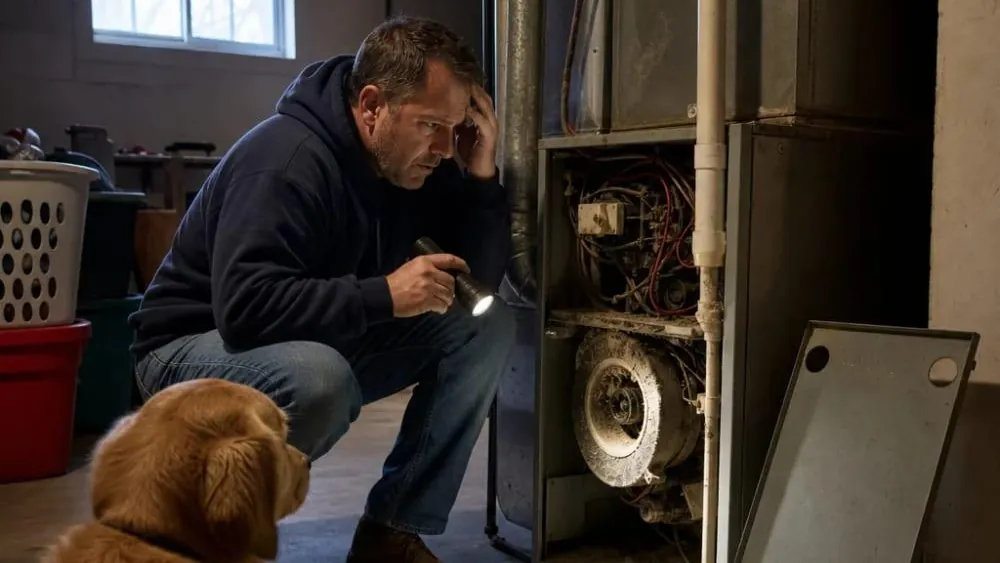
The blower motor is another potentially expensive failure. We got a call last winter from a family off Gravois Road. Their furnace hummed and the burners lit, but no warm air came out. The blower motor had burned out. It was a substantial furnace repair, though not the biggest.
They'd heard a faint squeal for weeks before it quit. The squeal started in November; by January, the motor had seized. The earlier noise had been a warning that something needed attention.
What about a furnace that keeps turning on and off? Sometimes it's a dirty flame sensor, which may be a quick fix. Other times it's a failing control board or inducer motor. Those repairs can cost more and take longer to sort out. You can't tell which part is responsible from the thermostat alone.
A lot of homes around Fenton still run furnaces that are 15 years old or older. On an older unit, a cracked heat exchanger or a dead blower motor can change the repair-versus-replacement conversation. We'll walk you through your options. Sometimes a furnace repair makes sense. Sometimes a furnace replacement is the better choice for your family.
If you're unsure which scenario fits yours, our team can inspect the furnace and explain what's happening before you authorize a repair.