What Is the Typical Lifespan of a Furnace?
We see it on service calls in Fenton every winter. One home has a 22-year-old furnace still humming along. Down the street, a 13-year-old unit is short cycling and struggling to keep up. Same town. Same cold snaps. Very different results.
If your furnace is making odd noises, heating unevenly, or shutting off too soon, don't assume it needs replacing. Our furnace repair service in Fenton can identify what's wrong and help you weigh a repair against replacement.
A furnace's age tells you when to pay closer attention. Its condition tells you what to do next.
What Affects How Long a Furnace Lasts?
Two furnaces can leave the factory on the same day and age in completely different ways. One quits at 12 years; the other is still running at 22. Here are the conditions that help explain the difference.
Installation and furnace size
A furnace that's too large for the house may heat rooms quickly, shut off, and start again soon afterward. This short cycling puts repeated starts on components such as the igniter and can leave temperatures uneven. A furnace that's too small may struggle to maintain the thermostat setting during a severe cold.
Proper sizing takes more than square footage. Insulation, windows, air leakage, and the home's heating needs all affect the calculation. Poor venting or an improperly installed gas line also creates problems that should be evaluated by a qualified technician—not treated as ordinary wear.
Filters and airflow
A dirty filter restricts airflow. The blower has to work against that restriction, and the furnace can overheat or shut down on a safety limit. Blocked registers and duct problems can contribute to poor airflow too.
Last winter, we pulled a filter from a Fenton ranch home that was solid gray. The homeowner had forgotten it was there. The furnace was only nine years old and already showed stress cracks. That's a serious finding requiring professional assessment, not simply a reminder to change the filter.
Check your filter regularly and replace it according to its condition and the manufacturer's guidance. For many households, that means checking monthly and replacing it somewhere within a one-to-three-month interval.
Maintenance and timely repairs
A yearly tune-up gives a technician the chance to check burners, ignition components, airflow, safety controls, and signs of corrosion or overheating. It doesn't guarantee 20 years of service, but it can uncover problems before they cause a breakdown.
Last January, we visited a family off Gravois Road. Their 11-year-old furnace had never had a tune-up. Its filter was packed with dust, and the heat exchanger showed early wear associated with overheating. That furnace needed a careful evaluation of its condition and safety, not a prediction based on age alone.
We've also worked on furnaces well past 20 years that continued to operate safely. Their owners had kept up with maintenance and addressed problems as they appeared. A weak inducer motor or dirty flame sensor, for example, deserves diagnosis before a small fault becomes a no-heat call.
Fenton weather and basement moisture
Fenton winters can swing from a mild week to a single-digit night. Those changes alter how often and how long the furnace runs. In St. Louis County, a stretch of hard freezes can expose problems that weren't obvious during milder weather.
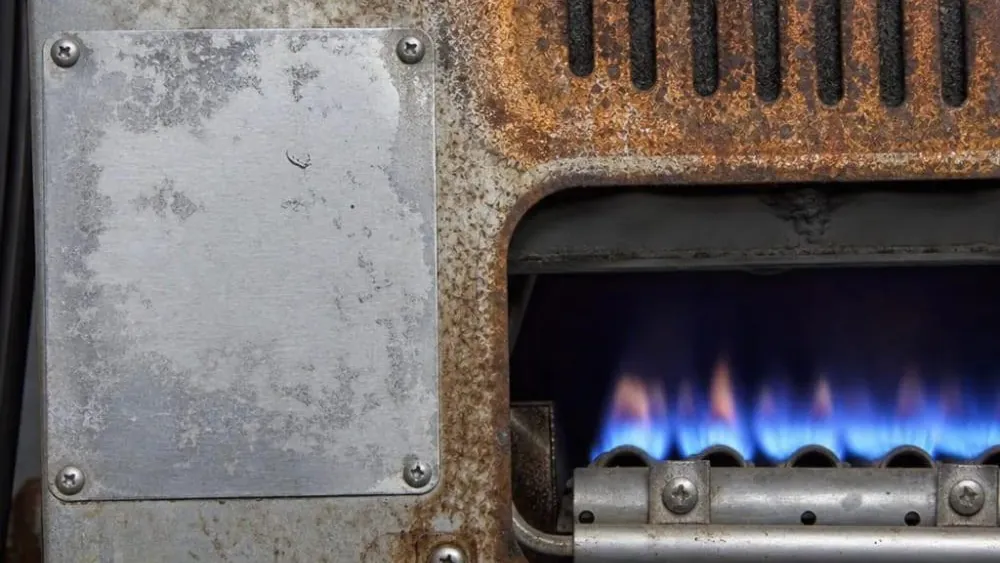
Homes near the Meramec River can also have damp basements. Summer humidity may leave a furnace sitting in moist air for months while the heat is off. Over time, corrosion can affect metal components, including burners and parts of the heat exchanger. If your basement stays damp, addressing the moisture source and controlling humidity can help limit corrosion.
Thermostat habits play a smaller role. Large, frequent changes can alter cycling patterns, but normal setbacks are not a reason to avoid using a programmable thermostat. Correct sizing, clear airflow, and maintenance deserve more attention.
Signs Your Furnace May Be Near the End of Its Life
An aging furnace doesn't always fail without warning. Watch for changes in how it starts, sounds, and heats your home:
- Repeated repairs: Another breakdown follows soon after the last repair, especially on a furnace older than 15 years.
- Uneven heating: Some rooms stay chilly while others become too warm. Ductwork or airflow may be responsible, so this doesn't automatically mean the furnace is failing.
- Short cycling: The furnace starts and stops frequently without completing a normal heating cycle.
- Unusual noises: Banging, rattling, or squealing that wasn't there before can point to a mechanical problem.
- Higher heating bills: Costs rise even after accounting for weather and fuel-price changes.
- Combustion warning signs: Soot or an unusual burner flame on a gas furnace calls for professional attention.
One symptom may have a straightforward fix. Several problems appearing together on an older furnace deserve a closer look.
Last January, a family off Gravois Road in Fenton called about their 19-year-old furnace. It had needed three repairs since Thanksgiving. Each fix got the heat working again, but another part failed weeks later. They were tired of wondering whether the house would be warm in the morning. That's when the conversation shifts from fixing the latest part to the cost and reliability of keeping the whole system.
Take possible gas or carbon monoxide hazards seriously. A cracked heat exchanger may allow combustion gases to enter the home's air, but its condition needs professional evaluation. Keep working carbon monoxide alarms installed according to their instructions. If you smell gas, leave the building and call your gas utility or emergency services from outside. If a carbon monoxide alarm sounds, get everyone outside and call emergency services; don't stay inside to troubleshoot the furnace.
When Does Repair Make More Sense Than Replacement?
A 15-year-old furnace doesn't need replacing just because it reached a round number. Start with the diagnosis, then look at the cost of the repair, the furnace's overall condition, and how reliably it has been heating the house.
A single failed igniter or flame sensor may be a reasonable repair even on an older unit. A major repair on a furnace with repeated breakdowns, corrosion, or serious heat-exchanger damage calls for a different discussion. Safety defects must be resolved before the furnace is operated.
Ask the technician to explain what failed, what the repair will cost, and whether other components show significant wear. Then compare that with the installed cost of a properly sized replacement and any potential savings in fuel use. Don't assume a newer furnace will pay for itself quickly; that depends on your current equipment, energy prices, and the efficiency of the replacement.
The U.S. Department of Energy's guide to furnaces and boilers (opens in a new tab) explains how heating efficiency affects operating costs and what to consider when evaluating older equipment.
If repair bills are piling up over two winters, ask for both options in writing. A technician should be able to explain the tradeoffs without pushing you toward replacement when a sound repair will do.