
Repair costs can range from $100 to $2,500 and higher depending on the issue. To get a fair quote, you want to look for a company that delivers quality 5-star HVAC service and performs a complete diagnostic on the entire heating and air conditioning system during your in-home service call.
Ask for a diagnostic report card on your system's performance at the time of service. It can also help to understand the categories of common repairs before calling for AC system repair service.
What to Expect for Common AC Repairs
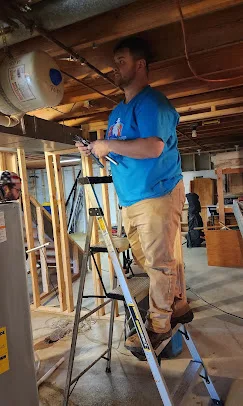
Minor Repairs: Quick fixes typically fall on the lower end of the pricing spectrum. This includes replacing small, wearable parts like capacitors and contactors, addressing bad thermostat connections, or clearing a clogged condensate drain. According to the U.S. Department of Energy, regular maintenance can prevent many of these minor issues before they start. Clearing a clogged drain, for example, usually takes less than an hour and prevents expensive water damage in your home.
Mid-Range Repairs: Components that perform heavy daily lifting, such as blower motors and fan motors, fall into the mid-range category. Refrigerant leaks are also included here, as locating the leak requires time, repairing it requires specialized skill, and the refrigerant itself carries a specific material cost. It is important to note that a refrigerant leak forces your compressor to work harder, which can lead to larger system failures if ignored.
Major Repairs: The most expensive repairs involve heavy-duty components like the compressor or the evaporator coil. These parts carry higher material costs and require significantly more labor. If a major repair begins to approach the cost of a full system replacement, your technician should have a transparent conversation with you about your long-term options.
Five Factors That Influence Repair Pricing
Not every repair is priced the same, even for seemingly similar issues. Five primary factors shape the final cost of an AC repair in our community:
- The Specific Part: The exact component that failed is the largest driver of cost. We see a lot of capacitor and contactor failures in Fenton during July and August, which are typically quick, affordable repairs. Less common components or major parts, like an evaporator coil, take longer to source and install.
- System Age: Older units are generally more expensive to repair. Parts for systems over 15 years old can be difficult to locate or may be discontinued. Additionally, older equipment frequently suffers from multiple compounding issues, adding to both labor and material costs.
- Refrigerant Type: The EPA officially completed the phaseout of R-22 refrigerant in 2020. Because the remaining supply is limited and continually shrinking, recharging an older system with R-22 will cost significantly more (opens in a new tab) than servicing a newer system that utilizes R-410A.
- Equipment Accessibility: The location of your unit heavily impacts labor time. Homes near Gravois Road and some of the older neighborhoods around Fenton often have setups that make access tricky. An indoor unit tucked into a tight crawl space or cramped attic requires more time to safely service than a system in an open utility closet, which increases labor costs.
- Timing and Urgency: Peak heat waves in the St. Louis area generate high demand for emergency and after-hours service, which can impact costs. Catching unusual noises or weak airflow in the spring is always recommended to avoid total breakdowns on the hottest days of the year.
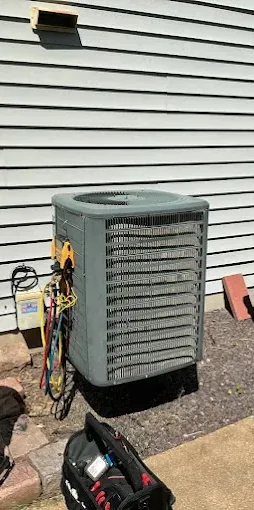
Repair or Replace: Making the Right Call
Deciding whether to repair a broken air conditioner or replace it entirely is a common challenge.
When to Repair: If your system is under 10 years old and has been well-maintained, repairing a single worn part is almost always the best financial decision. We sometimes see homeowners near Gravois Bluffs panic over a single breakdown, but one repair doesn't mean your entire system is failing. It just means a part wore out.
When to Replace: Most AC units have a lifespan of 15 - 20 years, according to the U.S. Department of Energy (opens in a new tab). If your unit is older than 12 years and requires a major repair, replacement is often the more cost-effective choice. For example, we recently assisted a homeowner off Larkin Williams Road whose 13-year-old unit experienced a compressor failure. Because the repair costs were extensive on an aging system, they opted for a replacement and saw an immediate drop in their summer energy bills.